Private Investigator Near Me – 5015 Madison Ave Unit #A90 Sacramento, CA 95841
Can a Civilian Look Up a License Plate?
Yes, a civilian can look up a license plate, but they cannot access the registered owner’s name and address without a valid legal reason. Personal information tied to a license plate is protected by the Driver’s Privacy Protection Act (DPPA), so a reverse license plate lookup must be done through a legal process with a permissible purpose.
What Does It Mean to Look Up a License Plate
Most people asking this question are trying to find out who owns a vehicle.
They want to know if they can take a license plate number and get:
the owner’s name
the home address
contact information
This is called a reverse license plate lookup.
It means using a license plate number to search for information tied to a vehicle or the person who owns it.
In most cases, a basic search will only show vehicle details like the make, model, and year.
Getting the registered owner’s name and address is different. That information is protected and can only be accessed through a legal process with a valid reason.
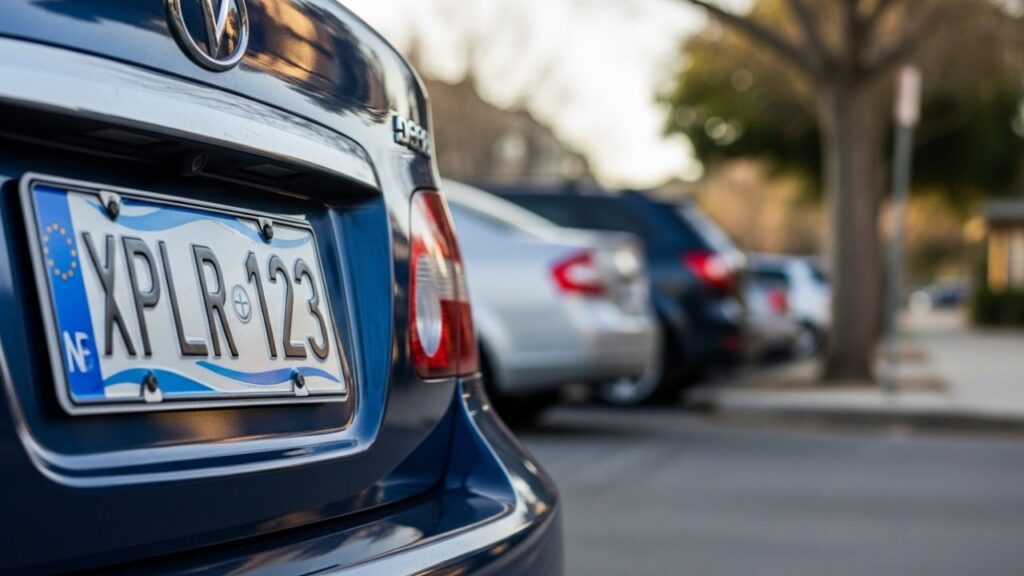
If you already have a license plate number and a valid reason, you can request a license plate lookup to find the registered owner’s name and address.
Is It Legal for a Civilian to Look Up a License Plate
This is where most people get confused.
Yes, a civilian can look up a license plate, but there are limits on what information can be accessed.
There is a federal law called the Driver’s Privacy Protection Act, also known as the DPPA. This law protects personal information stored in DMV records.
That includes:
the registered owner’s name
home address
contact information
Because of this law, that information is not available to the general public.
To access it, you must have what is called a permissible purpose.
That means a valid legal reason.
Common examples include:
an accident or hit and run
an insurance claim
a court case
a fraud or investigation
If you do not have a valid reason, you will not be able to legally obtain the registered owner’s information from a license plate.

What Is a Reverse License Plate Lookup
A reverse license plate lookup is when you use a license plate number to find information about a vehicle or the person who owns it.
This is what most people mean when they ask if they can look up a license plate.
In a basic search, you may be able to find:
the vehicle make
model
year
But that is not what most people are looking for.
They want to know who owns the vehicle.
A true reverse license plate lookup that returns the registered owner’s name and address can only be done through a legal process with a valid reason.
Without that, you will not get real results.

Real Case: Using a License Plate After a Hit and Run
Here is a real situation I handled.
A woman contacted me after her SUV was hit in a parking lot.
The other driver left the scene.
She did what most people would do. She called the police.
They told her there was not much they could do because the damage was minor.
But she had one thing.
The license plate number.
She wanted to know who hit her so she could take action.
This is where a reverse license plate lookup comes in.
Because there was a valid reason, I was able to run the lookup through legal channels.
I identified the registered owner and provided her with the name and address.
From there, she was able to move forward and handle the situation.
This is how license plate information is actually used in real cases.
In situations like this, having the right information makes all the difference. If you have a license plate number and a valid reason, you can request a lookup to identify the registered owner.

How to Look Up a License Plate Legally
If you want real information from a license plate, you need to do it the right way.
There is a process, and it has to follow the law.
Here is how it works:
You need a valid reason
You use a legitimate lookup service
You provide the required details
The request is reviewed
You receive the results
This is how a legal reverse license plate lookup is done.
If you try to use random free websites, you will not get the information you are actually looking for.
The system is set up to protect personal data, so real results only come from proper channels.

Quick Example: Minor Damage in a Parking Lot
Not every case is a hit and run with major damage.
In one situation, a client came to me after their car was hit in a parking lot.
The damage was minor. It did not make sense to file an insurance claim.
But the other driver left without leaving a note.
The client had the license plate.
We used that plate with a valid reason to identify the registered owner so the client could handle it directly.
This is a common situation where a reverse license plate lookup can help.

Why Free License Plate Lookup Sites Don’t Work
You have probably seen websites that claim you can look up a license plate for free.
Most of them do not work the way people expect.
They may show basic vehicle details like:
make
model
year
But they do not provide the registered owner’s name and address.
That information is protected by law.
Because of the Driver’s Privacy Protection Act, real personal data cannot be given out to just anyone.
That is why free sites cannot provide full results.
If you are trying to find out who owns a vehicle, you will need to go through a legal process with a valid reason.

Recognized License Plate Lookup Service
This type of work is not just theory. It comes from real cases and real results.
The license plate lookup services referenced here have been recognized with a License Plate Lookup Service Excellence Award for accuracy and reliability.
This award reflects real-world use in situations like:
hit and run cases
insurance claims
court judgments
private investigations
When you are dealing with something important, accuracy matters.

Best Reverse License Plate Lookup Websites
If you are trying to find information from a license plate, there are several websites that offer lookup tools and vehicle data.
Some focus on general vehicle details, while others provide more advanced lookup options when used for a valid reason.
Here are some of the most commonly used options:
1. License Plate Owner
A simple platform focused on license plate-based searches and vehicle-related data.
2. License Plates Car
Provides tools and resources related to reverse license plate lookup and vehicle information.
3. South Dakota License Plate Lookup
A state-focused lookup site that provides information tied to South Dakota vehicle records.
4. Vermont License Plate Lookup
Another state-based lookup resource with a focus on Vermont vehicle data.
5. Best License Plate Lookup (Google Site)
A curated resource that lists different license plate lookup tools and options.
6. Lance The PI
Private investigator services that can access deeper information when a legal purpose is provided.
7. VinCheckUp
Provides vehicle history reports and plate-based lookup data.
8. GoodCar
Offers vehicle reports and ownership-related insights.

Another Example: Using a License Plate to Enforce a Judgment
In another case, a client had a court judgment against someone who owed them money.
They located a vehicle connected to the person but needed to confirm ownership before taking legal action.
The client had the license plate number.
Because this involved enforcing a judgment, it qualified as a permissible purpose.
We used the license plate to identify the registered owner and confirm that the vehicle belonged to the judgment debtor.
With that information, the client was able to move forward with filing the proper legal paperwork to seize and sell the vehicle to satisfy the judgment.
This is another example of how a reverse license plate lookup can be used legally in real situations.

Final Answer: Can a Civilian Look Up a License Plate
Yes, a civilian can look up a license plate.
But they cannot legally access the registered owner’s name and address without a valid reason.
That information is protected by law and can only be obtained through a proper process with a permissible purpose.
If you have a legitimate reason, a reverse license plate lookup can provide the information you need.
If not, you will only find basic vehicle details.
Knowing the difference is important.
It can save you time and help you take the right steps.
If you have a license plate number and a valid reason to identify the registered owner, you can request a lookup to get accurate information through the proper legal process.
Frequently Asked Questions
Can you look someone up by their license plate?
Yes, you can look someone up by their license plate, but you cannot access their name and address without a valid legal reason. A reverse license plate lookup that provides personal information must be done with a permissible purpose.
What can someone do with your license plate number?
Most people can only use a license plate number to find basic vehicle details like the make, model, and year. Personal information such as the owner’s name and address is protected and not available to the general public.
Is it legal to look up a license plate?
Yes, it is legal to look up a license plate. However, accessing personal information tied to that plate is restricted under the Driver’s Privacy Protection Act. You must have a valid reason to obtain that data.
Can anyone run a license plate number?
No, not everyone can run a license plate number to get full details. Only authorized individuals or those with a permissible purpose can access personal information connected to a plate.
Can you get someone’s name from a license plate?
You can get someone’s name from a license plate only if you have a valid legal reason. Without that, the information is not publicly available.
Can you get an address from a license plate?
An address tied to a license plate is protected information. It can only be accessed through a legal process with a permissible purpose.
What is a reverse license plate lookup?
A reverse license plate lookup is the process of using a license plate number to find information about a vehicle or its owner. Basic searches show vehicle details, while full owner information requires legal access.
Are license plate records public?
License plate numbers are visible to the public, but the personal information linked to them is not. Laws protect the owner’s identity and contact details from public access.